
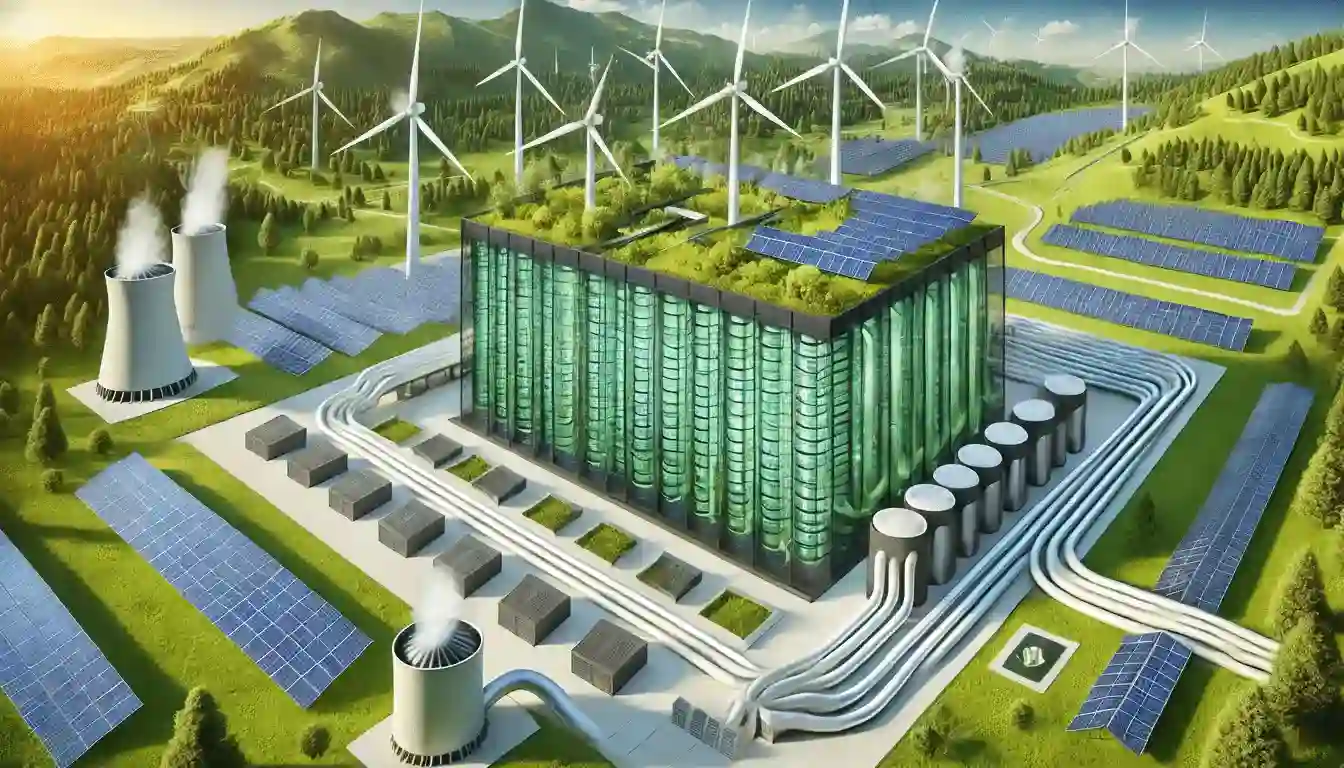
The rapid expansion of AI data centers is colliding head-on with an equally swift transformation in how these facilities source their power. Recent research from the International Energy Agency (IEA) highlights record-breaking investments in data centers accompanied by explosive growth in electricity demand. The critical question no longer revolves around whether renewables will replace fossil fuels but rather how much of this surge they can realistically power—and how quickly.
The Reality of Clean Power Market Share Today
Leading cloud and AI operators like Google, Microsoft, and Meta already report offsetting nearly 100% of their annual electricity consumption through long-term renewable energy contracts such as power purchase agreements (PPAs) for wind and solar, or by purchasing renewable energy certificates (RECs). However, accounting for annual offsets is not the same as running entirely on clean power at all times. Company disclosures and grid data reveal that hourly coverage of carbon-free energy typically ranges between one-third and two-thirds depending on location and season.
Outside the hyperscale campuses, the picture is less green. Surveys from the Uptime Institute show many colocation and enterprise data center operators—especially newer AI hubs—lack coherent long-term renewable strategies. With the global electricity grid averaging around one-third low-carbon generation, the true real-time renewable share powering AI workloads is significantly lower than headline corporate claims suggest.
Booming Procurement Faces Grid Bottlenecks
Corporate clean energy procurement continues to break records, led by hyperscale operators. There is a gradual shift from generic renewable certificates toward 24/7 carbon-free energy deals that combine solar, wind, storage, geothermal, hydroelectric, and grid flexibility services. At scale, companies like Equinix and Digital Realty are regionalizing PPAs to better support rapidly growing AI campuses.
Yet grid constraints remain a major bottleneck. U.S. national lab studies note gigawatt-scale backlogs and multi-year wait times for connecting new renewable and storage projects to the grid. This delay often forces AI developments into regions with abundant power but heavy fossil fuel reliance—unless developers embed on-site or nearby clean energy resources and harness flexible load management from the outset.
Renewables’ Share of the Energy Market by 2030
Based on IEA outlooks, corporate commitments, and procurement trends, the future energy mix for AI data centers looks like this:
In mature markets, hyperscale AI campuses are projected to maintain 80–100% annual renewable energy matching by 2030, with hourly carbon-free supply reaching 50–80% in regions rich in wind, solar, storage, hydro, or geothermal resources (e.g., Texas, Midwest U.S., Nordics).
Globally, including colocation and emerging AI hubs, annual renewable matching may settle around 50–70%. However, without accelerated transmission expansion and energy storage deployment, hourly real-time clean energy shares could fall well below these annual averages.
Key variables influencing renewable integration include location strategy, continuous 24/7 contracting, and access to firm clean power. Policy also plays a significant role: Europe is tightening efficiency and reporting standards; Ireland limits grid connections near Dublin; Singapore is opening capacity linked to efficient low-carbon imports. These policies encourage cleaner energy portfolios but add complexity to site selection.
Where Will the Clean Megawatts Come From?
Even at large AI campuses, on-site solar is expected to contribute a relatively small fraction of power demand. Utility-scale wind and solar, combined increasingly with long-duration storage solutions—capable of supplying power during days or weeks without sun or wind—will carry the load. Microsoft, for example, has piloted multi-megawatt hydrogen fuel cells as diesel alternatives, while utilities are introducing green tariffs that bundle new renewables with storage and grid services. Nuclear power life extensions and geothermal expansion can provide reliable, clean baseload where available, though small modular reactors are unlikely to scale significantly this decade.
Software innovation will also help bridge the gap. Carbon-aware scheduling, already trialed by leading cloud providers, can shift flexible AI training workloads to times of abundant renewable generation, improving the economics of clean power projects. In contrast, inference workloads that run 24/7 to handle user requests will still require steady, firm clean power to elevate hourly carbon-free energy shares.
Bottom Line: AI Data Centers and Renewable Power
How much of the AI data center boom will be fueled by renewable energy? Today’s leading operators can effectively match approximately 100% of their annual electricity use with clean power purchases, but real-time carbon-free supply at any location ranges from just 30% to 70%. By 2030, top-tier AI campuses in favorable regions could reach 60–90% hourly clean energy on average, while the global average for annual matching might approach 50–70%. However, real-time clean energy shares will lag unless grid decarbonization, procurement, storage, and transmission infrastructure progress in tandem. The gap between annual renewable claims and hourly reality will narrow only with coordinated expansion across these areas.